
Danakil Depression Eritrea: The Ultimate Travel Guide & Tours (2026)
Complete travel guide to the Danakil Depression Eritrea, the hottest place on Earth. Lake Badda, Afar nomads, tour prices from $350, safety tips, packing list & more.
Adulis Travel’s Danakil expedition runs 4 days from Asmara: 34–38 °C year-round, 100 metres below sea level, rough unpaved 4×4 driving from Massawa, and rugged camping with no showers and no electricity. You must drink 5–6 litres of water a day. A Danakil permit is required, and tours close June to August, when it reaches 45–50 °C.
Stand on neon-yellow sulphur fields, gaze into the turquoise waters of Lake Badda, and trek alongside Afar nomads in one of the most alien landscapes on Earth. This complete guide to the Danakil Depression in Eritrea includes a detailed 4-day expedition itinerary, expert safety advice, a complete packing list, and everything you need to book the adventure of a lifetime.
1. Introduction to Danakil Depression Eritrea
2. Danakil at a glance
3. What is the Danakil Depression?
4. Geology and tectonics
5. Why visit from Eritrea?
6. Lake Badda guide
7. The Afar people of Danakil
8. Water safety in Danakil
9. Danakil packing list
10. Danakil photography guide
11. 4-day Danakil expedition
12. Eritrea visa and permits
13. Health and vaccinations
14. Cultural etiquette
15. Danakil monthly weather
16. Danakil FAQ
17. Danakil photo gallery
18. Responsible tourism
19. Final thoughts
Welcome to the Danakil Depression in Eritrea
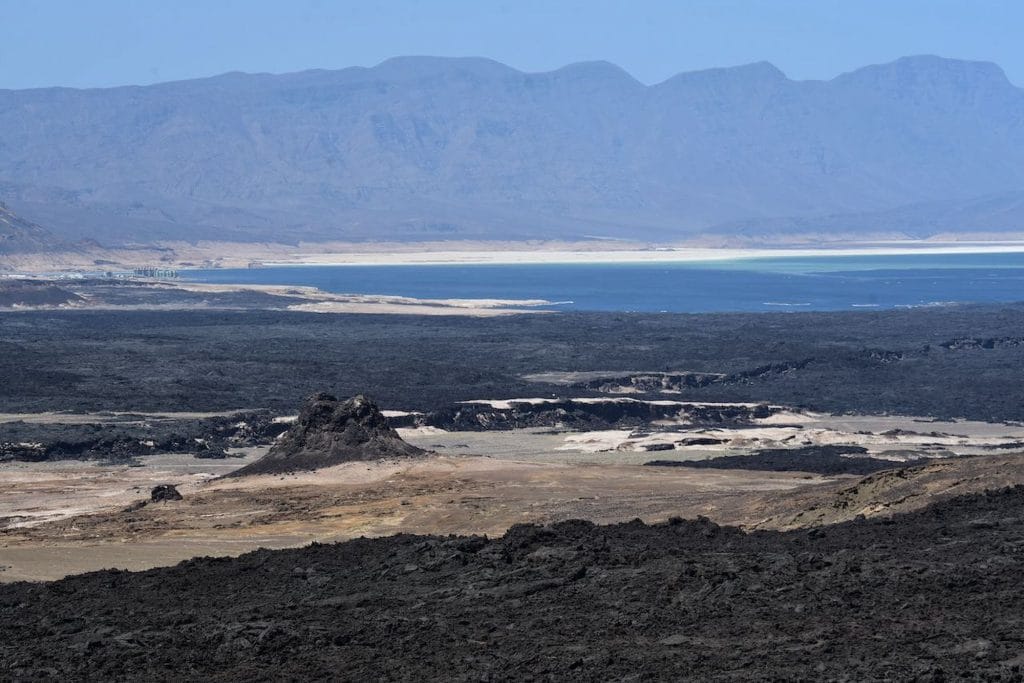
The Danakil is a single geological system that straddles the Eritrea and Ethiopia border. Some photographs in this guide were taken on the Ethiopian side of the Afar Triangle, where the same salt flats and hydrothermal fields continue; they are labelled where that is the case.
The Danakil Depression in Eritrea is one of the most extreme, beautiful and least-visited places on planet Earth. Located in the northern Afar Triangle, this extraordinary destination holds world records for the highest average annual temperature (34-38°C year-round), sits 100 metres below sea level, and receives less than 200 mm of rain annually. The Danakil Depression in Eritrea: known locally as Dankalia, offers adventurous travellers a chance to witness neon-yellow sulphur fields, turquoise crater lakes, and the legendary Afar nomads who have mastered survival in Earth's hottest place. This complete 2026 guide to the Danakil Depression in Eritrea gives you everything you need for the adventure of a lifetime.
Why this guide to the Danakil Depression in Eritrea is different: Most online information focuses on the Ethiopian side (Dallol), which now sees hundreds of tourists daily. The Eritrean Danakil Depression remains a true frontier. This guide is based on 40+ successful expeditions run by Adulis Travel, the local experts behind Eritrea's top attractions.
Danakil Depression Eritrea: Quick overview at a glance
What is the Danakil Depression? Gateway to Hell and Cradle of Humanity
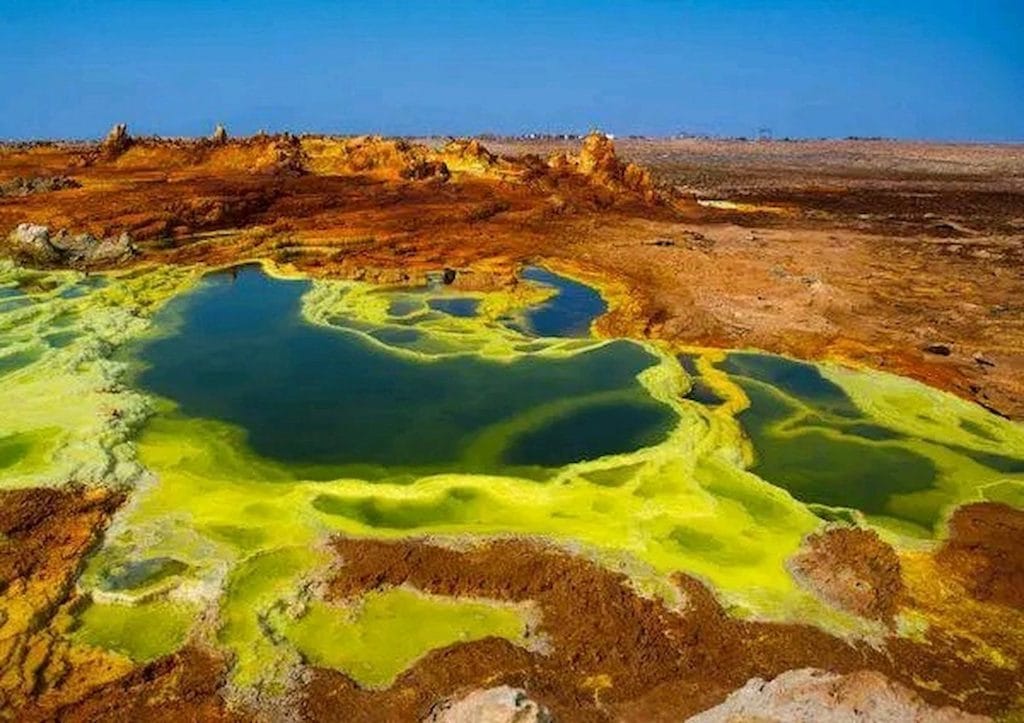
Colourful sulphur fields in the Danakil Depression, A palette of neon colours
The Danakil Depression in Eritrea earned the fearsome nickname "Gateway to Hell" from early explorers who witnessed its bubbling lava lakes, acid springs and relentless heat, conditions so extreme that they believed only hell could be hotter. The surface temperature can reach 70°C (158°F) in summer, and the ground is too hot to touch. At the same time, the Danakil Depression in Eritrea is called the "Cradle of Humanity", the famous 3.2-million-year-old hominid fossil "Lucy" (Australopithecus afarensis) was discovered in this region, proving that our earliest ancestors walked these lands as the tectonic plates began pulling apart.
Geology of the Danakil Depression: Where continents collide
The Danakil Depression in Eritrea sits at a tectonic triple junction, one of only two places on Earth where three tectonic plates meet. Here, the Nubian Plate, Arabian Plate, and Somali Plate are pulling apart at 1-2 centimetres per year, thinning the Earth's crust from the typical 30-50 km thickness to just 10-15 km. This extraordinary geological process creates:
- 01Active volcanoesand hot springs reaching 100°C (212°F)
- 02Sulphur formationsin neon yellow, green, red and orange colours
- 03Fumarolesroaring steam vents that sound like jet engines
- 04Salt pansup to 5 metres thick, ancient sea beds from when the Red Sea flooded the Danakil Depression
Scientific importance: NASA and the European Space Agency study the Danakil Depression in Eritrea as a Mars analogue. The extremophile microbes living in the acidic springs here resemble what scientists believe might exist on the red planet.
Why visit the Danakil Depression from Eritrea?
Salt flats of the Danakil Depression, Driving across the ancient sea bed
The Eritrean Danakil Depression offers what the Ethiopian side cannot: absolute isolation and authentic cultural encounters. Here is why the Eritrean side wins for adventurous travellers:
- 01No crowds:You will likely be the only tourist group in the entire Danakil Depression in Eritrea: complete solitude
- 02Lake Badda:A stunning turquoise crater lake found nowhere on the Ethiopian side of the Danakil
- 03Authentic Afar encounters:Meet Afar nomads whose hospitality is rooted in honour, not commerce
- 04Combine with Massawa:Visit the historic Red Sea port with Ottoman and Italian architecture
- 05Safety:Eritrea has one of Africa's lowest crime rates, with a mandatory military escort for your protection in the Danakil Depression
Lake Badda: The hidden turquoise jewel of the Danakil Depression in Eritrea
Lake Badda, The emerald treasure of the Dankalia region in Eritrea
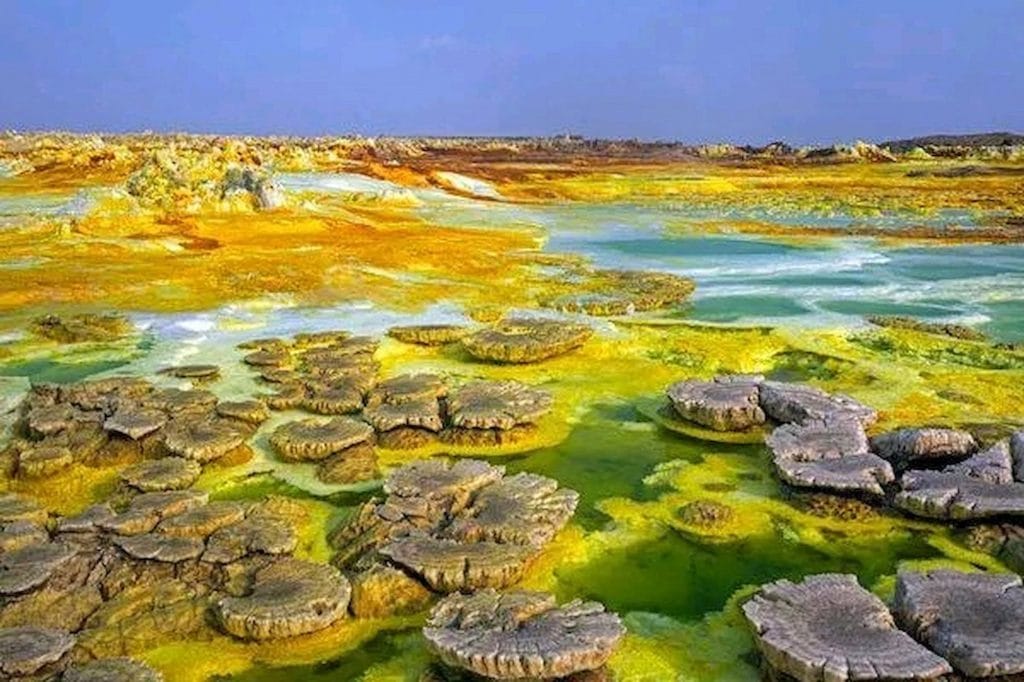
Lake Badda is the single most unique feature of the Danakil Depression in Eritrea. Located near the village of Badda (which means "dead sea" in the Afar language), this extinct volcanic crater is roughly 300 metres in diameter and 50-100 metres deep. Its intense turquoise colour comes from a unique combination of minerals (calcium, magnesium, sulphur), extremophile algae that thrive in alkaline conditions, and light refraction due to the crater's unique geometry. The best time to photograph Lake Badda is between 11:00 AM and 1:00 PM, when the sun is directly overhead, the vertical light turns the water a brilliant neon turquoise that looks completely unreal.
The Afar people: Legendary nomads of the Danakil Depression
Afar camel caravan, Transporting salt across the Danakil Depression
The Afar people (also called Danakil) have lived in this furnace for over 1,000 years. Traditionally pastoralists, they move with herds of goats, sheep and camels in search of water and grazing land. Salt mining is their main source of cash income, men cut large salt slabs from dry lake beds by hand using simple axes, loading 10-15 slabs per camel for days-long treks to markets in Massawa and beyond. This backbreaking work has changed little in centuries. What visitors remember most is Afar hospitality: in a land where survival is difficult, sharing resources is considered a sacred duty. You will likely be offered sweet tea, fresh goat milk, or rest in their portable huts (ari). A small gift, sugar, tea, medicine or cloth, is appreciated but never demanded.
Water in the Danakil Depression: THE MOST IMPORTANT SECTION
You MUST drink a minimum of 5-6 LITRES of water per day in the Danakil Depression in Eritrea. That is 5-6 one-litre bottles. Your tour operator will provide this water. DO NOT ration water, drink continuously throughout the day. By the time you feel thirsty, you are already dangerously dehydrated. Check your urine colour: pale yellow or clear means good hydration; dark yellow or orange means danger, drink immediately. Tap water is NOT safe to drink anywhere in Eritrea. Bottled water only. Bring electrolyte tablets or powder to add to your water, they replace salts lost through sweating and help prevent heat exhaustion.
Complete packing list for the Danakil Depression in Eritrea
Sun protection (non-negotiable in the Danakil Depression): SPF 50+ sunscreen (waterproof, apply every 2 hours), UV-protection sunglasses (wraparound style), wide-brimmed hat with chin strap, SPF 30+ lip balm, shemagh or neck gaiter (soak in water to cool down).
Clothing for Danakil (light colours only): 3-4 long-sleeved, loose-fitting cotton or linen shirts; 2-3 long trousers (NO shorts, sunburn and dust); 1 light fleece or jacket for cool nights (desert temperatures drop after sunset); 4-5 pairs of wool or synthetic socks; 4-5 pairs of quick-dry underwear.
Footwear for the Danakil terrain: Sturdy, broken-in hiking boots (high-ankle support required, the ground is sharp and uneven) and sandals or Crocs for camp.
Gear and gadgets for Danakil expedition: 20,000 mAh power bank (there is NO electricity in the desert), headlamp with extra batteries, universal plug adapter (Europlug Type C/F), earplugs (wind and wildlife noise), sleep mask.
Hygiene in the Danakil: Large pack of wet wipes, biodegradable soap, shower, hand sanitiser, 2 rolls of toilet paper, toothbrush and toothpaste.
Medical supplies for Danakil Depression (lifesaving): Personal prescriptions (bring enough for the trip plus extra in case of delays), electrolyte tablets or powder (10+ servings), anti-diarrhoea medication (loperamide), blister plasters (Compeed, your boots will cause blisters), painkillers (paracetamol, ibuprofen), rehydration salts (ORS for emergencies).
Documents and money for Eritrea travel: Passport (valid 6+ months beyond travel), pre-arranged Eritrean visa, travel insurance that specifically covers extreme adventure activities and medical evacuation, cash in US dollars or Euros (clean, unmarked bills from 2016 or newer, older bills may be rejected).
Do NOT bring to the Danakil Depression: Drones (strictly prohibited, confiscated at Asmara airport, you will not get them back), expensive jewellery, unnecessary electronics.
Photography guide for the Danakil Depression: Capturing the alien landscape
Best photography locations and times in the Danakil Depression in Eritrea:
- 01Lake Badda:11:00 AM to 1:00 PM (overhead sun creates the brilliant turquoise effect) and sunset (6:00 PM) for warm light on black volcanic rocks
- 02Sulphur springs (Dallol area):Early morning (7-9 AM) or late afternoon (4-5:30 PM) for dramatic shadows that reveal texture, overhead sun flattens the colours
- 03Salt flats with Afar camel caravans:Golden hour (5-6 PM) for long dramatic shadows of camels and miners
- 04Afar portraits:Always ask permission first (say "Salâm, photo?" with a smile). Diffused light (cloudy or early morning) is most flattering
- 05Night sky / astrophotography:Zero light pollution in the Danakil means incredible Milky Way shots. Use a tripod, 15-30 second exposure, ISO 1600-3200, widest aperture available (f/2.8 or wider)
Protecting your camera gear in the Danakil Depression: Dust is the number one enemy, change lenses inside a clean bag, never in open air. Heat drains batteries fast, keep batteries cool and bring spares. Use a protective UV filter on lenses. When moving from hot outside to an air-conditioned vehicle, put your gear in a sealed plastic bag first to prevent condensation inside lenses.
4-day Danakil Expedition itinerary for the Danakil Depression in Eritrea
Day 1 of Danakil expedition: Asmara to Massawa, The descent
Start your Danakil Depression tour in Asmara at 2,326 metres altitude. Descend through breathtaking switchbacks down to the Red Sea coast, a dramatic 2,400 metre drop in just two hours of driving. Yes, it is possible on the first day of the tour to begin the descent immediately after arrival if your flight lands early. Arrive in Massawa, the historic Ottoman and Italian port city on the Red Sea. Overnight in Massawa with fresh seafood dinner, try the grilled fish and lobster.
Meals included: Dinner | Accommodation: Hotel in Massawa
Day 2 of Danakil expedition: Massawa to Badda village, Camp under the stars
Pivot from the Red Sea coast into the desert toward Badda village. The drive takes 4-6 hours on rough, unpaved 4x4 roads, prepare for a bumpy but unforgettable journey. Set up camp near Lake Badda. As night falls over the Danakil Depression in Eritrea, you will experience one of the most vivid starry skies on Earth, zero light pollution means the Milky Way stretches like a river of stars, so bright and close you feel you could touch it.
Meals included: Breakfast, lunch, dinner | Accommodation: Camping near Lake Badda
Day 3 of Danakil expedition: Salt flats and geothermal wonders
Wake before dawn to witness Afar salt miners at work, men cutting salt slabs by hand using simple axes and loading 10-15 slabs per camel, a scene unchanged for centuries in the Danakil Depression. After sunrise, explore Lake Badda at the perfect overhead light for photography. Then visit the geothermal area: roaring steam vents (fumaroles), bubbling mud pools, and multicoloured sulphur formations in neon yellow, green, red and orange that look like a painting from another planet.
Meals included: Breakfast, lunch, dinner | Accommodation: Camping
Day 4 of Danakil expedition: Coastal return, Massawa – Asmara
Head back through the coastal plains to Massawa. Enjoy fresh grilled fish or lobster at a local restaurant right on the Red Sea. Explore Massawa's old town with its unique coral-block architecture, the Ottoman bathhouse, and the ruins of the Imperial Palace. In the afternoon, climb back 2,400 metres to Asmara, arriving in the late afternoon as the sun sets over the Eritrean highlands.
Meals included: Breakfast, lunch | Accommodation: Not included (hotel in Asmara can be arranged)
Eritrea visa and permits for visiting the Danakil Depression
Eritrean tourist visa: Every visitor needs a tourist visa. On every Adulis journey we prepare your Letter of Invitation (LOI) and pre-approval, so visa on arrival at Asmara airport is open to most nationalities: a USD 70 government fee plus our USD 50 handling fee, with no other hidden costs. If your country has an Eritrean embassy you normally apply there in advance instead, and we provide the same paperwork for it. Bring a passport valid for at least six months with two free pages, and allow 4 to 6 weeks before your planned Danakil Depression tour so the pre-approval is issued in good time.
Danakil special permit: An additional permit is required to enter the Danakil Depression region. Your tour operator arranges this for you, confirm it is secured before you arrive in Eritrea. The permit process can take several days, which is why advance booking is essential.
Internal travel permit: Any travel beyond roughly 25 km from Asmara needs a government travel permit, and a few border and Danakil zones are closed to visitors entirely. We file every permit before you arrive and plan the route around what is currently open, so you only travel where you are cleared to be.
Getting here, and the Ethiopian border: Asmara is reached on a single connection through Cairo, Dubai, Istanbul or Jeddah. There is no direct flight between Asmara and Addis Ababa and the land border with Ethiopia is closed, so Eritrea's Dankalia and the Ethiopian Danakil are two separate trips: never book an itinerary that promises a nonstop between the two.
Money: Eritrea runs on cash. There are no international ATMs and foreign cards are not accepted, so bring what you expect to spend in clean US dollars or euros and change it on arrival.
Health and vaccinations for the Danakil Depression in Eritrea
Malaria risk in the Danakil Depression: The Danakil is low risk for malaria (hot and dry, mosquitoes do not thrive here). However, Massawa and Asmara have some risk, especially during the rainy season. Consult your doctor about malaria prophylaxis (Malarone or Doxycycline are common options).
Pre-existing conditions and the Danakil Depression: If you have heart conditions, respiratory issues (asthma, COPD), or are prone to heat-related illness, consult your doctor BEFORE booking a Danakil Depression tour. The extreme heat (35-45°C) and remote location (4+ hours from the nearest hospital) make this a genuinely challenging destination.
Cultural etiquette: How to respect the Afar people and Eritrean culture in the Danakil Depression
Afar hospitality in the Danakil Depression, Sharing sweet tea is a sacred tradition
Dress code in the Danakil Depression and Eritrea: Long pants and long sleeves for everyone, this is both practical for sun protection and culturally respectful. Women should wear loose-fitting clothing that covers shoulders and knees. Men should avoid wearing shorts in villages or around Afar families.
Photography rules in the Danakil Depression: Always ask permission before photographing people, a simple "Salâm, photo?" with a smile and pointing to your camera is sufficient. Expect that some Afar people may want a small payment or gift for photos (your guide will advise appropriate amounts). Do NOT photograph military personnel, checkpoints, or government buildings, this is strictly forbidden and can result in arrest.
Interacting with Afar people in the Danakil: Say "Salâm" (hello) and "Gadda ge" (thank you). Accept hospitality if offered, refusing tea, milk, or rest can be seen as rude. Respect elders, greet older Afar people first. Do not touch people without permission. Do not enter homes (ari) without invitation.
Monthly weather breakdown for the Danakil Depression: When to go and when to avoid
Photo gallery: The most spectacular places in the Danakil Depression in Eritrea
Responsible tourism in the Danakil Depression: How to visit ethically
Leave no trace in the Danakil Depression: Pack out ALL trash. Do not bury anything. Your operator provides waste bags, use them. The Danakil is a fragile environment that must be preserved.
Respect the landscape of the Danakil Depression: Do not touch or break sulphur formations, they took thousands of years to form. Do not swim in the geothermal hot springs or acidic pools: their water is extremely hot (up to 100°C) and highly corrosive. Stay on marked paths.
Support local economies in the Danakil region: Buy souvenirs from Afar communities, salt carvings, traditional jewellery, and woven items. Your operator can arrange appropriate purchases.
Do not give money to children in Eritrea: It encourages begging and removes the incentive for education. Instead, give to community projects or schools through your tour operator.
Choose responsible tour operators for the Danakil Depression: Adulis Travel pays fair wages to Afar staff, uses local Afar cooks, drivers, and camel handlers, donates a portion of profits to local schools, and enforces strict leave-no-trace policies.
Final thoughts: Is the Danakil Depression in Eritrea worth visiting?
Sunset over the Danakil Depression, A memory for a lifetime
The Danakil Depression in Eritrea is not for everyone. It is for the true explorer, the one who wants raw, unfiltered nature without crowds or comfort. The one who understands that the most profound travel experiences often require effort, discomfort, and a willingness to step into the unknown.
Yes, it is challenging in the Danakil Depression: the heat is relentless (35-45°C), the camping is basic (no showers, toilets are buckets), the roads are brutal (hours of bumpy 4x4 driving). But standing on the edge of Lake Badda at midday, watching the impossible turquoise water glow under the desert sun, that image will stay with you for the rest of your life. Sitting with Afar elders, sharing sweet tea under a canopy of stars so bright you feel you could reach up and touch them, that is not something you can buy anywhere else. Walking across salt flats that were once the bottom of an ancient sea, knowing that the tectonic plates beneath your feet are slowly creating a new ocean, that is humbling.
For the traveller who has seen the standard sights and wants something genuinely extraordinary, the Danakil Depression in Eritrea delivers. Prepare properly, respect the land and its people, and go with an open mind. The Gateway to Hell might just become your favourite place on Earth.
Frequently Asked Questions
1. Is it safe to visit the Danakil Depression in Eritrea?
Yes, when you book an organised tour with local guides and the mandatory military escort. Eritrea has one of the lowest crime rates in Africa. The real dangers of the Danakil Depression are environmental, heat and dehydration, which are completely manageable with proper preparation. Thousands of travellers have completed Danakil expeditions safely.
2. Do I need to be in good physical shape to visit the Danakil Depression?
The extreme heat (35-45°C) is the biggest challenge, not physical exertion. You don't need to be an elite athlete, but you should be in good general health, able to handle high temperatures, basic camping conditions, and bumpy 4x4 roads for several hours. If you have heart conditions or are prone to heat-related illness, consult your doctor before booking a Danakil tour.
3. Can I visit the Danakil Depression without a tour?
Absolutely not. The Eritrean government does not issue permits to independent travellers for the Danakil Depression. You must book through a licensed tour operator like Adulis Travel. Attempting to go alone is extremely dangerous, there are no roads, no water sources, and no cell phone reception, and it is illegal.
4. Is the Danakil Depression suitable for solo female travellers?
Yes. With a guided tour and military escort, the Danakil Depression is as safe as anywhere. The Afar people are respectful and welcoming to all travellers. Female travellers should dress modestly (long sleeves, loose trousers) as a sign of cultural respect. Our guides are experienced with solo female travellers and will ensure you are comfortable and safe.
5. Can I bring a drone to the Danakil Depression?
No. Drones are strictly prohibited in Eritrea without special military permission, which is almost impossible for tourists to obtain. Your drone will be confiscated at Asmara International Airport upon arrival. You will not get it back. Do not bring a drone.
6. What is the best time to visit the Danakil Depression?
November through March, when daytime temperatures in the Danakil Depression are 35-38°C (95-100°F), still extremely hot but manageable. Avoid June through August when temperatures reach 45-50°C (113-122°F), tours do not operate during this period because the heat is lethal.
7. What is the accommodation like in the Danakil Depression?
Rugged camping only. There are no hotels, lodges, or permanent structures in the Danakil Depression. Your operator provides dome tents, foam sleeping mats, and shared camping toilets. There are no showers, you wash with wet wipes for 3-5 days. No electricity, bring power banks. This is a true expedition, not a luxury safari.
8. How much water should I drink in the Danakil Depression?
Minimum 5-6 litres per day. Your tour operator provides this water. Drink continuously throughout the day, do not wait until you feel thirsty. Check your urine colour: pale yellow or clear = good hydration; dark yellow = danger, drink immediately.
9. Do I need travel insurance for the Danakil Depression?
YES. Mandatory. Your tour operator will require proof of insurance. Your policy MUST cover: medical evacuation (helicopter), extreme adventure activities, 4x4 travel in remote deserts, and trip cancellation. Read the fine print, many standard policies exclude the Danakil Depression. World Nomads and Global Rescue are popular options.
11. Can I charge my phone or camera in the Danakil Desert?
No. There is no electricity in the Danakil Depression. Bring a 20,000+ mAh power bank for your phone and extra camera batteries, heat drains batteries quickly. Charge everything fully in Massawa or Asmara before departing for the desert.
12. What language do the guides speak in the Danakil Depression?
English (tour guides), Tigrinya (common in Eritrea), and often basic Afaraf. Most drivers speak Tigrinya and Arabic. Your main guide will be fluent in English.
14. Can I do a day trip from Massawa to the Danakil Depression?
No. The Danakil Depression is 4-6 hours from Massawa one way. A day trip would mean 8-12 hours of driving with only 1-2 hours at the destination. Minimum 3 days is required for any Danakil expedition.
15. Can I see the Erta Ale volcano from the Eritrean Danakil Depression? ▼
No. Erta Ale (the active lava lake) is in Ethiopia, across the closed border. You cannot cross from Eritrea to Ethiopia in this region. If you want to see Erta Ale, you must book an Ethiopian Danakil tour.
16. Can I combine a Danakil Depression tour with other Eritrean attractions? ▼
Yes. Most travellers combine the Danakil Depression with Asmara (UNESCO Art Deco architecture), Massawa (Red Sea beaches, diving, Ottoman architecture), Keren (weekly camel market), and the Dahlak Archipelago (island hopping, world-class diving). Plan at least 7-10 days total for Eritrea. See our complete guide to Eritrea's attractions.
For more on combining the Danakil with other highlights, see our Eritrea travel guide.
Plan your Eritrea trip with Adulis Travel
Read our complete Eritrea travel guide, browse related Eritrea tours, or request a private quote.
More Eritrea travel guides: Eritrea visa · is Eritrea safe? · attractions · Asmara · Massawa · the Eritrean railway · Keren · Qohaito.